QINGDAO, China, Sept. 23, 2026 /PRNewswire/ — A report from IQINGDAO.
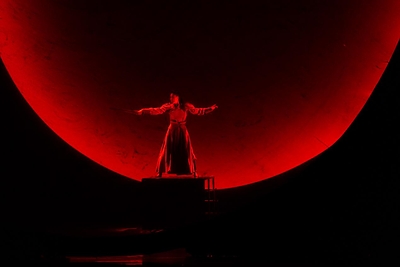
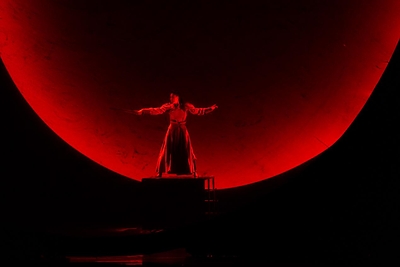
On the evening of September 18, local time, at the David H. Koch Theater at Lincoln Center in New York, the 2,586-seat auditorium was sold out. On stage was the Chinese dance drama “Mulan,” presented by Ningbo Performance & Arts Group: bronze mirrors and suits of armor appeared one after another, beacon fires rose, conscription orders arrived, and Mulan cut her hair before the mirror before setting out for the army. Amid the waves of applause, Professor Emily Wilcox of the College of William & Mary, a scholar of Chinese ethnic dance, found herself recalling the first time she saw “Mulan” three years earlier.
In 2002, while still a student at Harvard University, Wilcox first set foot in China with the Harvard Dance Group; she later pursued further training in Chinese ethnic dance at the Beijing Dance Academy. Over the years, she has traveled back and forth between China and the United States, writing books, giving lectures and hosting salons, bringing Chinese ethnic dance and the culture behind it into American university classrooms and international academic circles.
In September 2023, the dance drama “Mulan,” produced by Ningbo Performance & Arts Group, crossed the Pacific for its American debut, performing six shows at the Boch Center in Boston and the Kennedy Center in Washington, D.C. At the time, Wilcox was co-hosting a lecture on Chinese dance culture with the local Xuejuan Dance Ensemble. The students proposed, “Let’s talk about dance culture by day and see the show in the theater by night,” so she drove three hours to Washington. As the curtain rose, solos, pas de deux and ensemble dances unfolded in turn. A group of Chinese-American girls watched, rapt, their faces filled with wonder and awe. Among them, a girl named Ziying resolved to devote herself to studying Chinese ethnic dance; a year later, she traveled to China and became an international student at the Beijing Dance Academy.
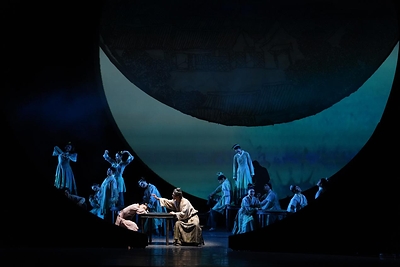
For Wilcox herself, however, Mulan remained an Eastern cultural specimen viewed from a distance. She understood the choreography and the storytelling, but had not yet entered the character’s spiritual core. Over the years, she has spent nearly every winter and summer break in China, serving as a visiting professor at Minzu University of China, leading groups of American students to Liaoning, Inner Mongolia and beyond, seizing every opportunity to see ethnic dance dramas and exchange ideas with experts on profound Chinese culture.
In April 2026, as China Performing Arts Group and Ningbo Performance & Arts Group prepared “Mulan” for another overseas tour, they invited Wilcox to write a letter of recommendation. To write it well, Wilcox—then a visiting scholar at Fudan University—bought a ticket and saw the show a second time in Shanghai. This time, she stood on Chinese soil, surrounded by the native cultural context: she understood that the orphan Rou’er was no superfluous subplot but a pointer to the wounds war inflicts on ordinary people; the bronze mirrors recurring on stage carried Mulan’s homesickness and her struggle with identity. Yet she had not fully grasped the deeper meaning behind some of the newly adapted plotlines.
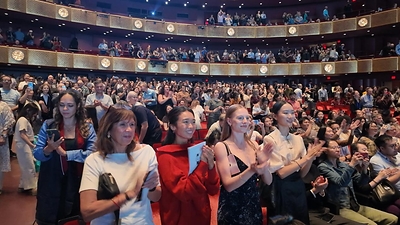
Two viewings, two blanks left unfilled—setting the stage for a third encounter in New York.
On September 18, Wilcox was invited to give a pre-show lecture before the performance. When the invitation first arrived, she felt some hesitation: her two previous viewings had not fully unlocked the work. But then she reconsidered—this drama, which has won major awards in China, must contain expressions worth exploring in depth; and she had always hoped to use her expertise to help American audiences cross the cultural divide and build a staircase of understanding.
To prepare the lecture, she threw herself into the work: tracing the evolution of the Mulan story across 1,500 years of versions, studying interviews with choreographers Han Zhen and Zhou Liya, poring over Chinese dance reviews and academic articles, and carefully dissecting every adaptive stroke. She finally understood the details that had once puzzled her: on the battlefield, when Mulan lets down her hair bun to reveal her female identity and her comrades still choose to respect and follow her into battle, it is a distinctly modern expression of womanhood unique to this version; the ending departs from the traditional trope of “triumphant return and marriage”—the general dies on the battlefield, and Mulan completes her spiritual standing alone, returning the character’s fate to the individual herself.
After the lecture, a white-haired elderly woman came up to thank her, saying the talk had finally helped her truly understand this Eastern dance drama; sisters who had once lived in Nanjing found their curiosity about Chinese culture rekindled by the performance. The barriers of culture quietly dissolved—in a lecture, a dance drama, and a conversation between people.
Taking her seat at Lincoln Center for the third time, Wilcox finally truly understood. As the revolving stage turned, the tenderness of the boudoir and the brutality of the battlefield flashed in alternation. Mulan was no longer merely an ancient heroine. “This dance drama reshapes Mulan from a one-dimensional hero into a multifaceted, vivid ordinary person. It maintains a prudent reflection on war and a delicate portrayal of women’s circumstances—this carries strong relevance in today’s world,” Wilcox said of the shock she felt on her third viewing.
“Amity between peoples holds the key to sound relations between states, and amity between peoples is built on mutual understanding.” Wilcox’s research confirms exactly this: dance is a universal language of the world. It needs no translation—the body itself is the shared language.
As the applause at Lincoln Center faded, Wilcox walked out of the theater with the crowd, recalling the light shimmering in the eyes of those Chinese-American girls three years before. Three encounters with Mulan—from observing, to puzzlement, to deep empathy; from interpreting a character on stage to seeing the boundless possibilities of mutual learning between two civilizations. The story of Mulan flows on, and so does cultural understanding. Perhaps, to truly understand a story, sometimes you need three years, three cities, and to first become part of the story yourself.
 View original content to download multimedia:https://www.prnewswire.com/news-releases/chasing-mulan-three-encounters-with-mulan-302888419.html
SOURCE IQINGDAO

Distributed by PR Newswire / Cision.