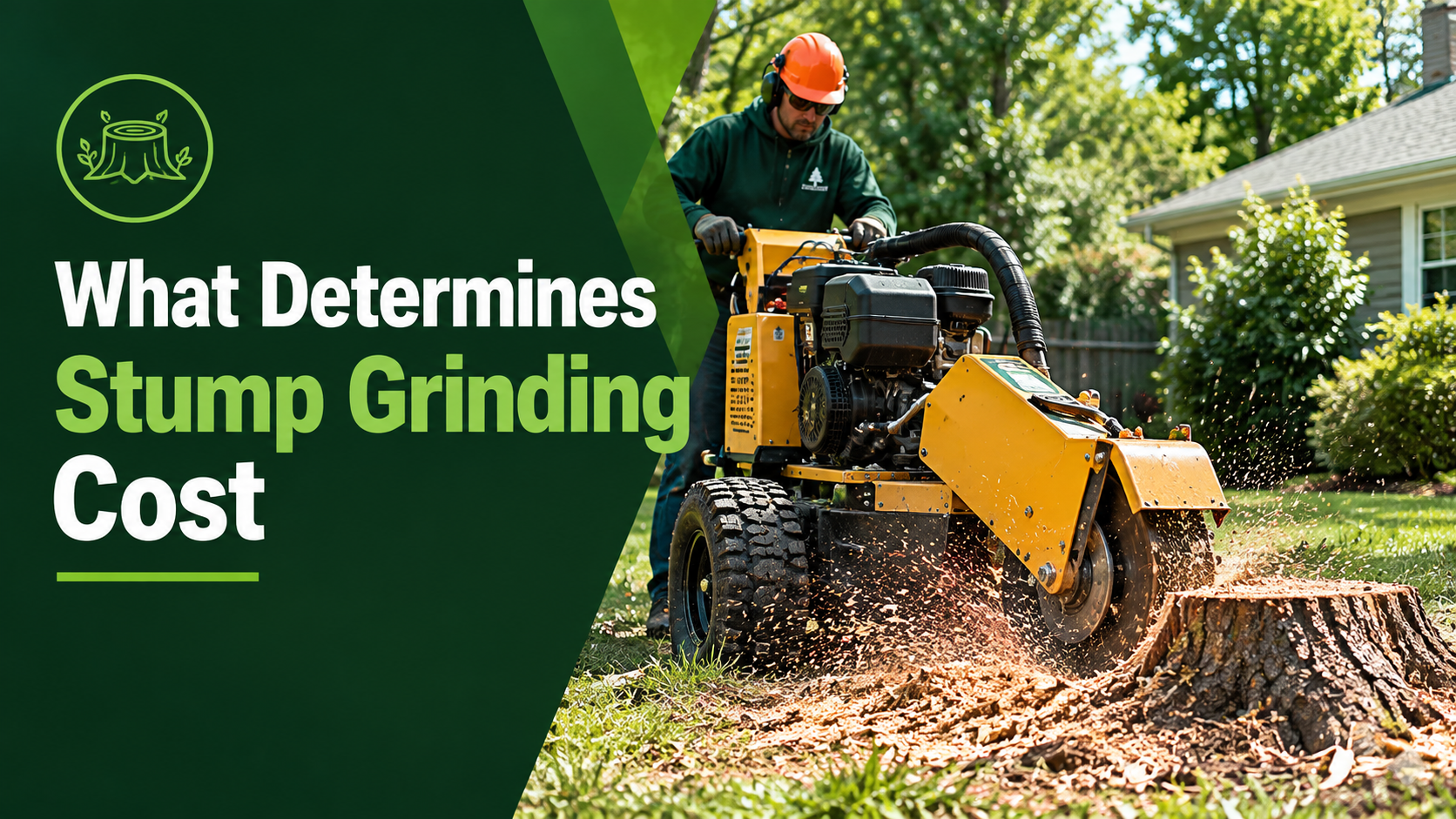
Removing a tree is often only part of completing a landscaping or property improvement project. Once the tree is gone, the remaining stump can become an obstacle for mowing, planting, construction, or general yard maintenance. Stump grinding provides an efficient way to reduce the stump below ground level without excavating the entire root system.
One of the first questions homeowners ask is how much stump grinding will cost. There is no single price because every stump and property is different. Contractors consider several details before preparing a quote, including stump diameter, root spread, wood type, accessibility, grinding depth, the number of stumps, and cleanup requirements.
Understanding these factors can help homeowners prepare a realistic budget and know what questions to ask when comparing professional estimates.
Stump Size Is a Major Cost Factor
Diameter Affects Grinding Time
The diameter of the stump is one of the most important factors affecting the price. Larger stumps contain considerably more wood and require more passes with the grinding equipment. Many contractors use a per-inch pricing method, although minimum service charges are also common. Current cost guides commonly report rates around $2 to $5 per diameter inch, with actual pricing varying by location and project conditions.
A small stump may take relatively little time to grind, while a large stump can require substantially more labor and equipment time. Measuring the stump at its widest point near ground level can help provide a more accurate starting point for an estimate.
Root Flare Can Increase the Work Area
The visible trunk does not always represent the entire area that needs to be ground. Some trees develop a broad root flare around the base. If the flare is significantly wider than the trunk, the grinder may need to remove additional material.
For this reason, a professional may inspect the stump and surrounding area instead of relying only on the diameter of the top surface.
Root Spread Can Affect the Price
Stump grinding and complete root removal are not the same service. Standard grinding generally focuses on reducing the stump below grade while leaving much of the deeper root system in the soil. If surface roots extend outward and the homeowner wants them ground as well, additional work may be necessary.
Surface Roots Require Extra Work
Large surface roots can extend several feet from the stump. Grinding these areas takes additional time and may require the contractor to expose portions of the roots before using the equipment.
If you want the area prepared for new landscaping, a garden, or another project, ask whether surface-root grinding is included in the initial estimate.
Wood Type and Condition Matter
The type and condition of the tree can also influence the grinding process. Dense hardwoods generally require more effort to grind than softer wood species. Some current cost guides note that hardwoods such as oak, maple, and walnut can require additional time compared with softer species.
An old, partially decayed stump may sometimes be easier to grind than a solid, dense stump. Contractors consider these differences when estimating labor and equipment requirements.
The Number of Stumps Changes the Overall Price
Multiple Stumps May Reduce the Cost Per Stump
If you have several stumps on the same property, ask about completing them during one visit. A contractor already has the equipment at your property, so travel and setup expenses can be spread across multiple stumps.
Some cost guides report lower per-stump pricing when several stumps are handled together. However, discounts are not universal, so it is important to request an itemized estimate rather than assuming a specific discount will apply.
Stump grinding cost depends on stump size root spread and quantity. Understanding these factors makes it easier to compare estimates and determine which services are included in the quoted price.
Accessibility and Property Conditions
Easy Access Can Keep Costs Lower
A stump located in an open, level yard is generally easier for equipment to reach. A stump behind a narrow gate, beside a fence, near a structure, or on a slope may require additional preparation or smaller equipment.
Difficult access can increase labor time because equipment may need to be moved manually or operated in a more restricted area. Current cost guides identify location and equipment access as important factors in determining the final price.
Obstacles Can Add Complexity
Rocks, buried objects, irrigation systems, fencing, and other obstacles can complicate grinding. Homeowners should tell the contractor about anything they know is located around the stump before work begins.
Grinding Depth Affects the Estimate
The depth you want the stump ground can also affect the price. A standard grinding job may remove the stump several inches below grade, while deeper grinding can require additional machine time.
If you plan to plant another tree, install landscaping, or use the area for construction, tell the contractor what you intend to do with the space. The desired finished depth may be different depending on the project.
Cleanup and Debris Removal
Grinding produces wood chips that remain around the stump after the work is completed. Some contractors leave the material on site, while others offer cleanup, hauling, backfilling, or additional landscaping services.
Removing chips and filling the resulting hole can increase the total project cost. Ask whether cleanup is included in the quoted price so you can compare estimates accurately.
How to Get an Accurate Stump Grinding Estimate
Before requesting a quote, gather basic information about the project. Measure the stump diameter, identify how many stumps need grinding, note any visible surface roots, and take photographs showing access to the work area.
When speaking with a contractor, ask:
- Is pricing based on diameter, time, or a flat rate?
- Is there a minimum service charge?
- How deep will the stump be ground?
- Are surface roots included?
- Is cleanup included?
- Will the wood chips be hauled away?
- Are there additional charges for difficult access?
- Is backfilling included?
Getting clear answers can prevent unexpected charges and help you compare estimates based on the same scope of work.
Frequently Asked Questions
What is the biggest factor in stump grinding cost?
Stump diameter is one of the primary factors because a larger stump requires more grinding time and material removal. Root flare, wood type, access, depth, and cleanup can also affect the final price.
Does stump grinding remove the entire root system?
No. Standard stump grinding generally removes the visible stump and grinds below grade, but deeper and spreading roots typically remain in the soil. Complete root-ball excavation is a different and more extensive service.
Is stump grinding cheaper when removing several stumps?
It can be. Multiple stumps may allow a contractor to spread travel and equipment setup costs across the project. However, discounts vary by contractor and location, so ask for a project-specific quote.
Does difficult access increase stump grinding cost?
Yes. Stumps located behind narrow gates, on slopes, near structures, or in areas with obstacles can require additional labor or specialized equipment, which may increase the price.
Should I have the wood chips removed?
That depends on how you plan to use the area. Leaving chips behind may cost less, while hauling them away and backfilling the hole creates a cleaner surface for future landscaping. Discuss your preferred final result with the contractor before work begins.
Conclusion
Several factors determine the final price of stump grinding. Stump diameter, root spread, wood type, accessibility, grinding depth, stump quantity, and cleanup can all affect the estimate. A small stump in an open yard may require considerably less work than a large stump with extensive roots in a difficult location.
The best way to understand your actual project cost is to request a detailed estimate from a qualified professional. Ask exactly what is included, how deep the stump will be ground, whether roots and cleanup are part of the service, and whether additional charges apply. With a clear scope of work, you can plan your budget more confidently and prepare the area for its next use.