
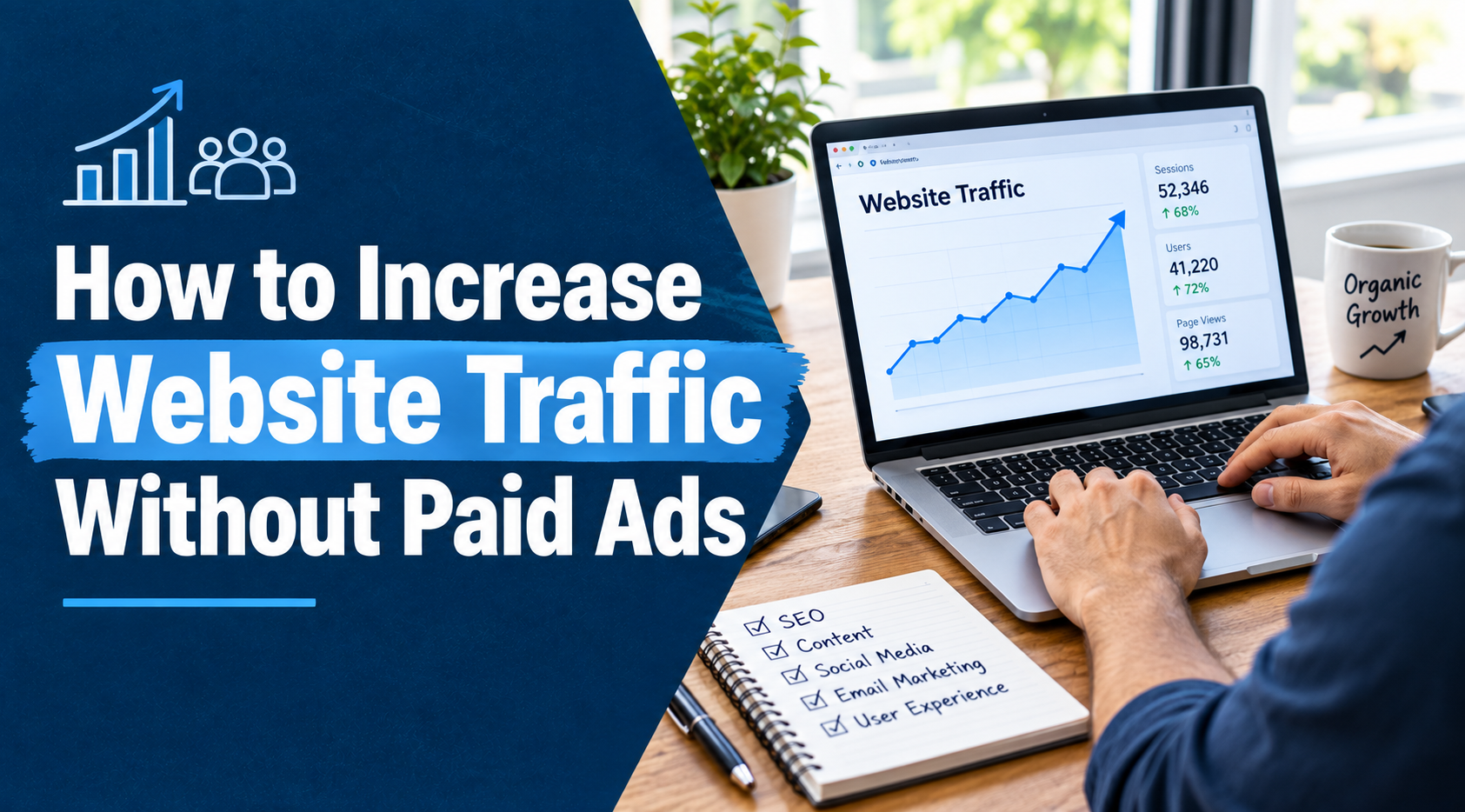
Getting more visitors to your website does not always require a large advertising budget. While paid ads can generate quick traffic, businesses can also attract consistent visitors through organic strategies that build visibility, credibility, and long-term growth. The key is to understand what your audience is searching for and create useful experiences that encourage them to visit, engage, and return.
If you are wondering how to increase website traffic without spending money on advertisements, there are several proven approaches worth incorporating into your digital marketing strategy.
Create High-Quality, Helpful Content
One of the most effective ways to attract organic website visitors is through valuable content. Blog posts, guides, tutorials, FAQs, and educational resources can help your website appear when people search for information related to your products or services.
Focus on Search Intent
Before creating content, consider what your audience actually wants to know. Someone searching for “how to choose a roofing company” has a different goal from someone searching for “roof repair near me.”
Create content that directly answers the questions behind these searches. Address common concerns, explain complicated topics clearly, and provide practical information readers can use.
Publish Consistently
A website does not need to publish new articles every day. However, maintaining a consistent content schedule can help build a larger library of useful resources. Over time, each relevant page creates another opportunity for search engines to discover and display your website.
Improve Your SEO
Search engine optimization helps your website become more visible in unpaid search results. Strong SEO involves more than adding keywords to a page. It includes content quality, website structure, technical performance, and user experience.
Target Relevant Keywords
Research keywords your potential customers are actually using. Focus on specific phrases that closely match your services, products, and audience needs.
Long-tail keywords can be particularly useful because they often reflect specific questions or purchasing intentions. Instead of targeting an extremely broad term, create content around more detailed searches that are closely connected to your business.
Optimize Important On-Page Elements
Review your page titles, headings, URLs, image descriptions, and meta descriptions. Make sure they accurately describe the content and naturally incorporate relevant search terms where appropriate.
Internal links are also important. Link related pages together so visitors can easily discover additional information while search engines can better understand your site’s structure.
Build a Strong Internal Linking Strategy
Internal links connect one page of your website to another. They can help visitors find related information without having to return to a search engine.
For example, a blog post about website design could link to another page discussing SEO, content marketing, or conversion optimization. This creates a more useful browsing experience and gives visitors reasons to explore your website further.
A well-organized internal linking structure can also help distribute authority throughout your site and make important pages easier for search engines to discover.
Use Social Media to Expand Your Reach
Social media can be a useful source of website traffic when you share content that provides genuine value. Instead of simply posting promotional messages, share helpful articles, tips, videos, statistics, and answers to common customer questions.
Repurpose Existing Content
A single blog post can become several social media posts. You might turn its main points into short tips, create a video summary, or use individual sections as discussion topics.
Repurposing content allows you to reach different audiences without creating completely new material every time.
Earn Quality Backlinks
Backlinks are links from other websites to your website. When reputable and relevant websites link to your content, they can send referral visitors and potentially strengthen your site’s authority.
Create resources that other websites will want to reference. Original research, detailed guides, useful statistics, expert insights, and comprehensive tutorials can all provide opportunities for earning natural backlinks.
Guest contributions can also help when they are published on legitimate, relevant websites and provide useful information to readers.
Optimize for Local Search
If your business serves a specific geographic area, local SEO can help people nearby discover your website.
Keep your business information accurate and consistent across relevant online directories and platforms. Create location-specific content when it genuinely helps your audience, and make sure your website clearly communicates the areas you serve.
Local searches often reflect strong intent, particularly when someone is looking for a nearby service provider or business.
Improve Website Speed and User Experience
Getting visitors to your website is only part of the process. If pages load slowly or the site is difficult to navigate, visitors may leave before exploring your content.
Use a responsive design that works well on phones, tablets, and computers. Make navigation straightforward, organize information clearly, and remove unnecessary elements that make pages difficult to use.
A better user experience can encourage visitors to stay longer, view more pages, and return in the future.
Encourage Repeat Visitors
Not all website traffic needs to come from search engines. Build reasons for existing visitors to come back.
Email newsletters, useful resource updates, new blog posts, downloadable guides, and regularly updated information can keep your audience connected with your website. If visitors consistently find your content useful, they are more likely to remember your brand and return when they need additional information.
Organic Strategies Build Sustainable Traffic
Organic strategies build sustainable long-term traffic. Businesses looking for how to increase website traffic can focus on creating valuable content, improving SEO, strengthening internal links, earning quality backlinks, and providing a useful website experience.
The results of organic marketing may take time, but the work can continue producing value after a piece of content is published. A helpful article created today can continue attracting visitors through search months or even years later when it remains relevant and properly maintained.
Track Your Results and Improve
Use website analytics and search performance data to understand which pages are attracting visitors and which topics generate engagement. Look at traffic sources, popular landing pages, search queries, and user behavior.
If one article consistently attracts visitors, consider creating related content. If a page receives search impressions but few clicks, review its title and description. If visitors leave quickly, examine the page’s content, layout, and usability.
Organic traffic growth is an ongoing process. Regularly reviewing performance allows you to improve your strategy instead of relying on assumptions.
FAQs
How long does it take to increase website traffic organically?
Organic traffic can take several months to grow significantly. The timeline depends on factors such as competition, website authority, content quality, technical SEO, and the consistency of your efforts.
Can I increase website traffic without spending money?
Yes. Content marketing, SEO, social media promotion, internal linking, community participation, and relationship-based backlink opportunities can all contribute to organic traffic without requiring a paid advertising budget.
What is the fastest way to get organic website traffic?
There is no single guaranteed fastest method. Improving existing pages, targeting relevant long-tail keywords, answering specific search questions, and promoting useful content through existing channels can help create opportunities for faster growth.
Does blogging really increase website traffic?
Blogging can increase traffic when articles address topics that your target audience actively searches for. Consistently publishing useful, optimized content gives your website more opportunities to appear in relevant search results.
Are backlinks still important for website traffic?
Relevant backlinks can help generate referral traffic and may contribute to search visibility. Quality is more important than simply acquiring a large number of links.
Conclusion
Increasing website traffic without paid ads requires patience, consistency, and a focus on providing genuine value. Strong content, effective SEO, internal linking, social media promotion, backlinks, local optimization, and a positive user experience can work together to attract more visitors organically.
Rather than looking for a single tactic, build a complete strategy around what your audience needs. By creating useful resources and continuously improving your website, you can develop a stronger online presence and create sustainable opportunities for long-term traffic growth.