When people think about digital transformation, software platforms, cloud infrastructure, and consumer electronics usually come to mind first. Yet, some of the most impactful applications of semiconductor engineering and microprocessor control are happening on the metal fabrication floor. Modern metalworking has evolved far beyond brute-force electrical transformers and analog dial adjustments. Today, digital power management dictates arc stability, heat input, and cut quality down to the millisecond.
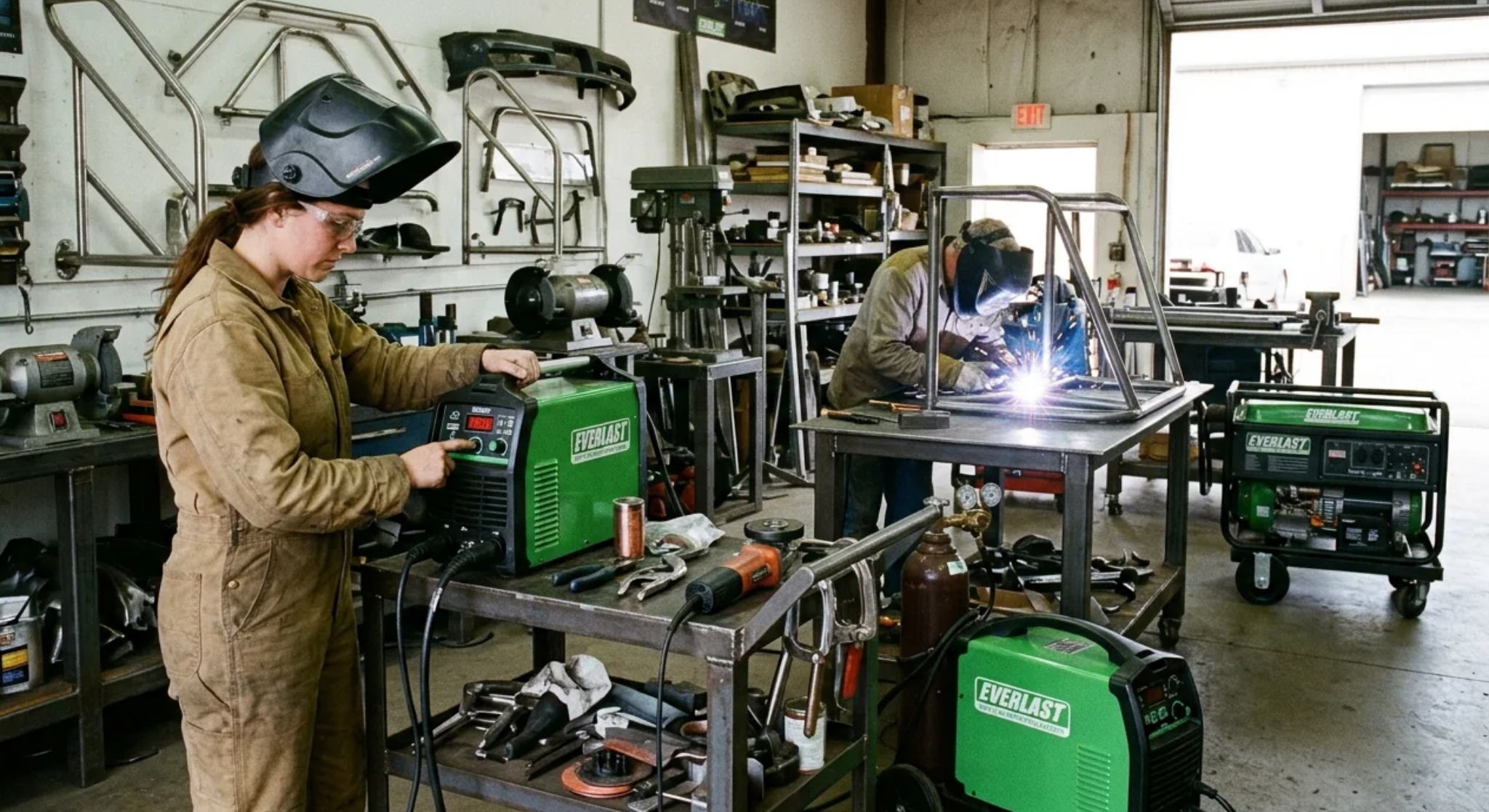
Examining how specialized equipment developers such as Everlast Generators engineer contemporary Welding Products demonstrates how solid-state electronics and multi-process architectures are reshaping both industrial manufacturing and independent workshops.
How IGBT Inverter Architecture Changed Power Delivery
For decades, traditional welding power sources relied on heavy copper-wound transformers to step down incoming utility voltage. While mechanically simple, transformer machines were bulky, power-hungry, and limited by AC line frequency (50 or 60 Hz).
The widespread adoption of Insulated-Gate Bipolar Transistor (IGBT) inverter technology fundamentally re-engineered power conversion. Instead of relying on massive magnetic cores, IGBT inverters rectify incoming AC power to DC, switch it at ultra-high frequencies using solid-state semiconductors, and step it down through compact high-frequency transformers.
| Engineering Metric | Legacy Transformer Machines | Modern IGBT Inverter Systems |
| Switching Frequency | Fixed 50/60 Hz utility line frequency | High-frequency digital switching (20 kHz+) |
| Physical Footprint | Heavy, stationary shop equipment | Compact, lightweight, portable chassis |
| Arc Response | Slower analog reaction to arc changes | Microsecond microprocessor waveform adjustment |
| Input Flexibility | Typically locked to a single voltage | Frequently supports dual-voltage (120V/240V) input |
Because microprocessors monitor and adjust output thousands of times per second, modern inverter systems maintain rock-steady arcs even when hand speed or torch distance fluctuates slightly.
Precision Waveform Control and Multi-Process Consolidation
In modern fabrication, working across diverse alloys from thin-gauge aluminum and stainless steel to heavy structural carbon steel requires distinct electrical characteristics. Digital inverter platforms enable advanced waveform manipulation that was previously impossible on entry- and mid-level shop machines:
- Pulse TIG Capabilities: High-frequency pulsing alternates rapidly between peak welding current and background cooling current. This minimizes overall heat input, preventing warping on thin sheet metal while maintaining deep root penetration.
- Adjustable AC Frequency and Balance: When welding aluminum, operators can fine-tune AC frequency to focus the arc cone and adjust cleaning balance to break up stubborn surface oxides without over-etching the base metal.
- Pilot-Arc Plasma Cutting: Modern plasma systems utilize blow-back start technology and pilot arcs to initiate cuts cleanly over painted, rusted, or expanded metal surfaces without high-frequency interference that could disrupt nearby CNC electronics.
Furthermore, engineering advances allow manufacturers like Everlast Generators to consolidate MIG, AC/DC TIG, Stick, and plasma cutting capabilities into unified multi-process systems. For agile workshops, having access to versatile Welding Products reduces floor clutter, lowers capital equipment costs, and eliminates workflow bottlenecks when switching between fabrication stages.
Clean Power Compatibility and Field Mobility
As fabrication increasingly moves out of stationary shops and into field service environments, power quality becomes a critical technical factor. Sensitive microprocessor-driven welders require clean, stable electrical input typically defined as less than 5% Total Harmonic Distortion (THD) when operated away from the utility grid.
Pairing modern inverter welders with clean-power inverter generators or dual-voltage 120V/240V circuits allows mobile technicians to perform precision aluminum TIG repairs or structural steel fabrication on remote job sites with the same arc control expected inside a climate-controlled facility.
Conclusion
Digital power electronics have quietly revolutionized modern metalwork, turning heavy industrial processes into finely tuned, energy-efficient disciplines. Through high-frequency IGBT switching, programmable waveforms, and multi-process integration, modern Welding Products from innovators like Everlast Generators empower fabricators to work cleaner, faster, and across a wider range of materials than ever before. As microprocessor controls and laser-assisted technologies continue advancing, precision power management will remain the foundation of quality metal fabrication.
Frequently Asked Questions (FAQs)
How does IGBT inverter technology improve weld quality?
IGBT semiconductors switch electrical current at ultra-high frequencies, allowing built-in microprocessors to adjust arc voltage and amperage thousands of times per second. This produces a smoother, more stable arc with less spatter and finer heat control compared to older transformer machines.
What is the benefit of pulse welding on thin metals?
Pulse welding alternates between a high peak current (to fuse the metal) and a low background current (to let the weld pool cool slightly). This reduces total heat buildup, preventing thin stainless steel or aluminum sheets from warping or burning through.
Why is blow-back start technology important for CNC plasma cutting?
Unlike older high-frequency start plasma cutters that generate electromagnetic interference capable of crashing computer controllers, blow-back start torches initiate the pilot arc mechanically via air pressure. This makes them safe and reliable for automated CNC plasma tables.
Can modern inverter welders run on portable generators?
Yes, provided the generator produces “clean power” with low Total Harmonic Distortion (typically under 5% THD) and sufficient surge wattage. Dirty power spikes from standard contractor generators can damage sensitive inverter circuit boards.